Losing a tooth is not only harmful to your appearance, it may also negatively impact how you eat, speak, and feel about yourself. Fortunately, there are many ways that modern dentistry can help replace missing teeth. One of the best ways to replace a missing tooth is with a dental implant.
Maansi Maanvi Multispeciality Dental Clinic (Annapurneshwari Nagar, Bengaluru) provides patients with several types of tooth replacement options depending upon their overall dental status, individual needs and what they want to achieve with treatment. Knowing how the procedure works, what the advantages are, and what to expect during recovery will allow you to make an educated choice regarding the best option for you to restore your smile.
What Is Dental Implant Treatment?
Dental implant treatment is an artificial root of the tooth, which is typically composed of biocompatible titanium, and can be implanted into the jaw bone to serve as a base for artificial teeth. It serves as a solid support system for dental crowns, bridges or implant supported dentures.
Implants differ from removable dentures as they provide stability to your teeth so you can chew food properly. Implants will help preserve your jawbone structure as they provide a similar stimulation to your jawbone as would be provided by your natural teeth.
A typical implant consists of three main components:
Implant Fixture: A small screw-like structure placed inside the jawbone.
Abutment: A connector that joins the implant to the replacement tooth.
Dental Crown: A custom-made artificial tooth designed to look and function like a natural tooth.
Whether you are a good candidate for dental implants depends on many factors including the health of your bones, the state of your gums, your overall well-being, and how well you care for your teeth.
Why Should You Consider Dental Implants?
Loss of teeth creates many problems in your day-to-day existence, and replacing those missing teeth will enhance your ability to function orally as well as give you a greater sense of self-assurance.
Here are some important benefits:
Natural-Looking Appearance
Your dental implants supported crowns will be tailor-made to match the appearance of your current teeth. These crowns are designed to fit in perfectly with the rest of your smile.
Improved Chewing Ability
Implants create an established base for new teeth so that some patients who are able to use them can eat more different kinds of food with ease.
Better Speech
When teeth are lost, or if dentures fit poorly, it can impact how you speak. Properly fitting, implant-supported teeth can make your speech more clear.
Supports Jawbone Health
When teeth are lost, the jaw bone will eventually begin to recede, as there is nothing left to provide the typical stimulation that would be provided by a healthy tooth root. An implant will prevent some of this loss of jaw bone.
Long-Term Tooth Replacement
When implanted properly, with frequent dental visits and proper oral health care, implants can serve as an extended-term alternative for missing teeth. However, the crown, along with other parts of the implant system, may need to be maintained or replaced during its lifetime.
Who Is Suitable for Dental Implants?
Dental implants could be an option for adults who have lost some number of teeth and would like to find a fixed replacement.
You may be considered for implants if:
- You have one or more missing teeth.
- Your jawbone has sufficient volume to support an implant.
- Your gums are healthy or any existing gum disease has been treated.
- You can maintain proper oral hygiene.
- Your overall health supports the healing process.
Patients who have diabetes, smoke, or suffer from specific health problems might require further evaluation prior to receiving treatment. Additionally, if you do not have enough jaw bone available for a successful dental implant procedure, a doctor could recommend that you undergo a bone grafting process.
To find out if dental implants would be appropriate for your situation, you will need a consultation with a dentist.
Step-by-Step Dental Implant Procedure
The more you know about the treatment process, the less anxious you will be about it and the better prepared you will be for each step of the way.
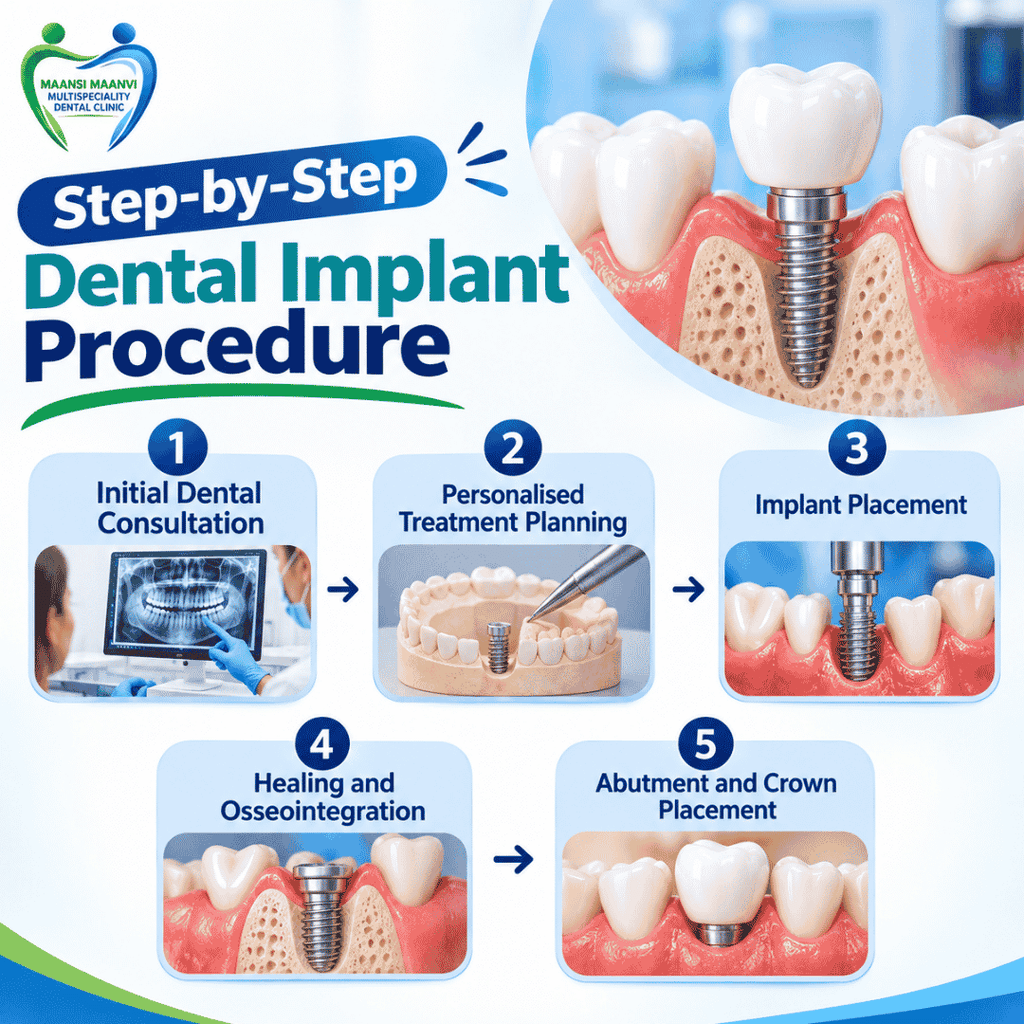
Step 1: Initial Dental Consultation
Your dentist will take a look at your teeth, gums and jawbone to get an idea of how healthy your mouth is. To find out about the quality of the bone and decide what to do next, he/she may suggest that you have an X-ray or a 3D image.
Step 2: Personalised Treatment Planning
Your dentist will create a treatment plan for you based upon the results of your examination. The treatment plan will include the quantity of implants needed, the type of restoration you will receive, and if other treatments are required.
Step 3: Implant Placement
The surgical placement of the implant fixture in the jawbone occurs with the use of a suitable anesthetic. Planning for the surgical placement will take into consideration both the accurate position of the implant and the patient’s level of comfort during the procedure.
Step 4: Healing and Osseointegration
In the next few weeks or months, the bone of your lower jaw will grow into contact with the surface of the implant. This bond is referred to as osseointegration and provides a solid base for the artificial tooth.
Step 5: Abutment and Crown Placement
As long as the healing process has progressed sufficiently, a custom made dental crown is placed onto a custom made abutment. At this point, the dentist will make sure that the fit of the crown, the look of the crown, and how it bites are correct so that the patient can use their teeth comfortably.
The total time it takes for a patient’s treatment will depend upon how long it takes for a patient to heal, the quality of their bones and the difficulty of their treatment.
How to Care for Your Dental Implants
To prevent infection and inflammation around your implants, it’s important that you maintain good oral hygiene. While implants don’t get cavities, they do have a potential risk of developing gum disease or bone loss.
Follow these simple care practices:
- Brush twice daily using a soft-bristled toothbrush.
- Clean between your teeth using suitable interdental brushes or floss.
- Follow your dentist’s instructions for cleaning around the implant.
- Avoid smoking, as it can affect healing and implant success.
- Attend regular dental check-ups and professional cleaning appointments.
- Report bleeding gums, swelling, pain or implant looseness promptly.
A regular maintenance program will preserve the tissue around your implants and promote long-term dental care.
How Much Does Dental Implant Treatment Cost in Bengaluru?
The prices of dental implants will vary based upon many different variables. Some of these include: how many missing teeth you have, which company manufactures the implant and what materials were used to create it, whether or not your jaw has enough healthy bone to support an implant, if there are any additional tests needed prior to placement and lastly the type of crown that is placed over the implant.
The total cost of the procedure can be affected by other factors like bone grafting or sinus lifting.
Do not just select your treatment plan based on cost. Consider the dentist’s assessment, treatment planning, type of material being utilized, and the amount of post-treatment support. A one-on-one consultation with the dentist is the most appropriate method to determine what you will be charged for your treatment.
Why Choose Maansi Maanvi Multispeciality Dental Clinic?
When you choose the best dental practice for your needs, you are taking a major step forward with your tooth replacement process. As you search for the perfect dental practice, remember to consider clinics that prioritize accurate diagnoses, individualized treatment plans, patient comfort, and post-operative care.
The patients of the Maansi Maanvi Multispeciality Dental Clinic (Annapurneshwari Nagar, Bengaluru) have an opportunity to meet with the clinic’s dental professionals to obtain information regarding the various treatment plans that are available to them. In addition to this, the dental professional will provide advice to the patient as to which of these treatment plans would be most suitable for the patient given the patient’s current oral health status.
A professional dental examination can assist in finding the best way to restore your smile regardless of if you are missing one tooth or numerous teeth.
Frequently Asked Questions (FAQs)
- How long do dental implants last?
With proper care dental implants may remain in place for several years or even decades. The length of time that a dental implant remains functional will depend upon how well the individual maintains their oral health, the general physical condition of the patient, the quality of bone supporting the implant, and the frequency of routine visits to the dentist.
- Is the implant procedure painful?
Usually, the procedure will be done using local anesthesia, which means there should be minimal pain when placing the device. After the procedure has been completed, you might have some slight discomfort or swelling.
- How long does the implant process take?
The overall time for the process will depend on how long it takes for the implant to bond to your jawbone and if other steps need to be taken. This can vary from person-to-person depending on their body’s ability to heal itself.
- Can dental implants replace multiple missing teeth?
Yes, depending upon the health of the jaw bone and how many missing teeth exist; there are several options available to utilize implants to restore a single tooth (crown), multiple teeth (bridge), or all of the teeth (full arch).
- Are dental implants better than dentures?
There are pros to both methods. Implants provide a permanent solution for replacing missing teeth, whereas dentures are adjustable/removable and can be better suited for some people. A person’s specific requirements and what is found during an exam will determine which option would work best.
Restore Your Smile with the Right Dental Care
Missing teeth will not restrict the confidence that you have in yourself or what you do every day. Proper diagnosis, personalized treatment planning and regular follow-up with implants will allow for restoration of oral function as well as creating a natural-looking smile.
If you’re thinking about getting dental implants, visit Maansi Maanvi Multispeciality Dental Clinic located at Annapurneshwari Nagar in Bangalore so that you may learn more about what types of treatment options are available to you and begin taking steps toward improving your overall oral health.
Go ahead and schedule a dental consultation to determine which method of replacing missing teeth is best for you.