Keeping teeth clean is a significant component of great oral health. Even with regular brushing and flossing, plaque and tartar can accumulate in areas that home care fails to reach over time. Regular professional cleaning can remove these deposits and aid in maintaining a healthier mouth.
One of the most often suggested expert oral cleansing therapies is Teeth Scaling & Polishing. Scaling removes plaque and hardened tartar on the teeth (sometimes referred to as calculus), while polishing smoothens tooth surfaces and removes some external stains. Combined, these processes can make the teeth feel fresher and cleaner.
What Is Teeth Scaling & Polishing?
Teeth Scaling & Polishing is a professional cleaning procedure performed by a dental professional to remove plaque, tartar, and surface stains from the teeth.
Plaque is a mass of bacteria that builds up and adheres to the teeth. If it is not adequately removed through brushing and flossing, it can form tartar. In contrast, tartar is not something you would generally be able to completely brush away with a conventional toothbrush.
Dental instruments are used to gently clean the deposits off of the tooth surfaces and, if needed, near or beneath the gums during scaling. This is followed by the polishing of the tooth surfaces using a polishing instrument and paste with this stain removal action limiting phenomenon.
Why Do You Need Professional Teeth Cleansing?
Although regular brushing and flossing could eliminate most, it may not get rid of every single deposit. Tartar can build around the gumline, between teeth, and other hard-to-reach places.
- Regular professional cleaning may help:
- Reduce plaque and tartar buildup
- Support healthy gums
- Remove certain surface stains
- Improve the feeling of cleanliness
- Decrease the bacteria related to bad breath
- Support preventive dental care
- Easier to maintain good oral hygiene
Professional cleaning is not a substitute for brushing and flossing every day. Instead, it is designed to complement your normal oral hygiene regimen.
Teeth Scaling & Polishing – What to Expect?
This process typically starts with checking the teeth and gums. Checking for plaque, tartar, inflamed gums, stains, cavities and more oral health issues.
Special instruments are used to eliminate hardened deposits during scaling. Ultrasonic scaling tools can be used to assist break down and remove tartar.
Then you move to polishing, after scaling is done. Smooth tooth surfaces and eliminate some external discoloration with a rotary polishing tool and specialized polishing paste.
Rinsing of the mouth may then follow, and the dentist might also offer tailored advice about brushing, flossing, and taking care of gum disease.
The specific process may differ based on how much buildup there is and whether you have healthy gums or teeth.
Duration of the Procedure
The time taken for Teeth Scaling & Polishing varies according to the build-up of plaque and tartar as well as the condition of the patient’s oral cavity.
The process could take approximately 30–60 minutes for regular cleaning but can take longer if the accumulated matter is more advanced. The scaling and polishing service page of Maansi Maanvi Multispeciality Dental Clinic also mentions that the procedure usually takes 30–60 minutes based on the tartar amount.
You may need more testing or treatment if you have heavy tartar buildup or gum-related issues.
Is Teeth Scaling Painful?
Most people deal with professional cleaning just fine. But some patients may notice short term sensitivity, especially with large tartar deposits, gum recession or sensitive teeth.
That discomfort can differ broadly from one person to the next. If you have sensitive teeth or worried about pain, let your dentist know before treatment. Selecting the dental professional can discuss treatment options may help to make the dentistry treatment and greater comfy primarily based on the situation.
Also, keep in mind that fearing sensitivity and postponing professional cleaning can still let plaque & tartar accumulate.
Benefits of Scaling and Polishing of Teeth
Teeth Scaling & Polishing is one of the most benefitting & also the most common procedure performed by dentists as it can help your teeth as well.
Potential benefits include:
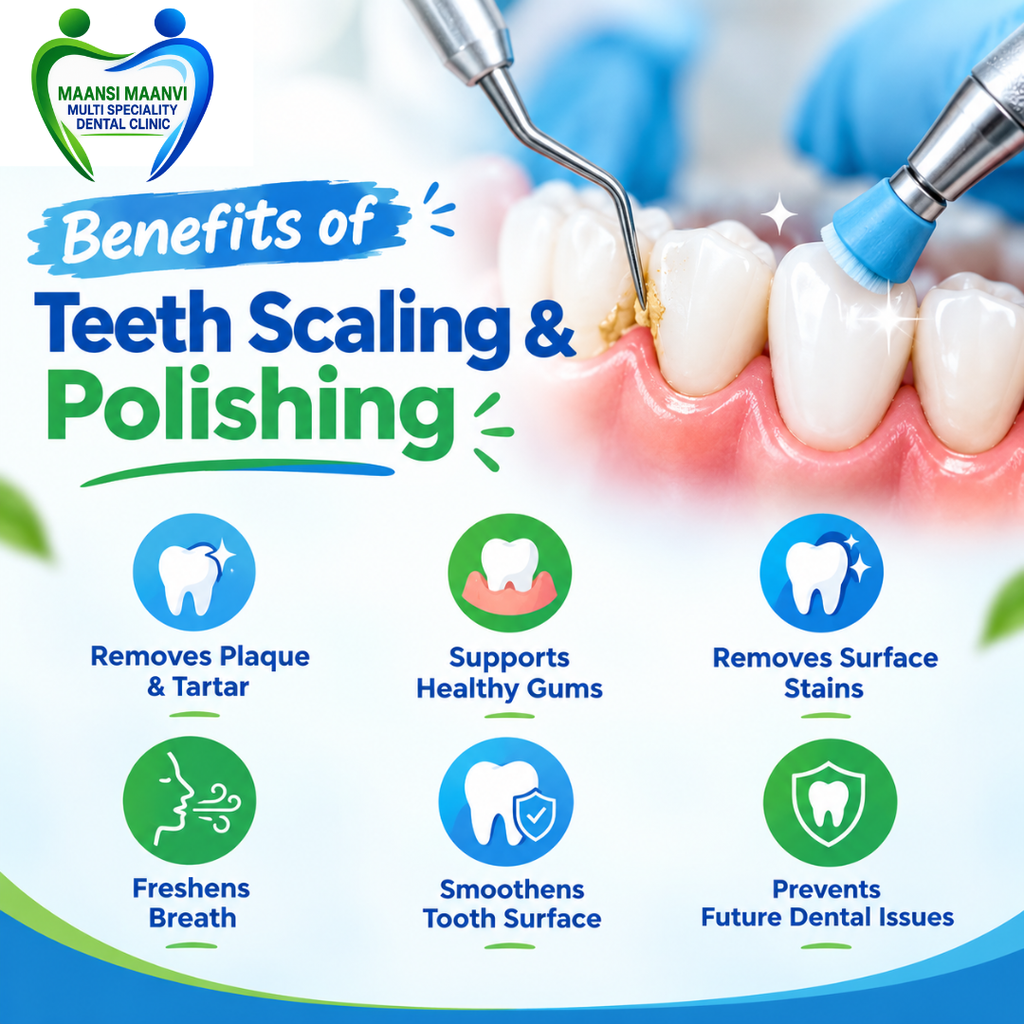
Removes Tartar
The scaling process gets rid of old tartar that has hardened on the tooth surface and around the gumline.
Helps Maintain Gum Health
Gum inflammation may be affected by plaque and tartar accumulation. Regular professional cleaning can lead to cleaner surfaces of your teeth and gums.
Removes Surface Stains
The polishing process can take out some of the external stains due to tea, coffee and other staining materials and foods.
Helps Freshen Breath
Cleaning the surface of your teeth by removing plaque, tartar and bacteria can help with healthy-smelling breath.
Creates a Smoother Tooth Surface
Polishing: Polishes the tooth, to make it smooth and give a better clean and smooth feeling after treatment.
Supports Preventive Dental Care
Routine dental cleaning accompanied with exams and also daily hygiene can find issues at an earlier phase.
Who Should Consider Professional Scaling and Polishing?
Scaling & Polishing may be recommended for individuals who have visible tartar, accumulation of plaque, surface stains on teeth and/or inflamed gums or those that find it difficult to maintain completely clean tooth surfaces at home.
It can also be one of the common dental care that you carry out for preventive purposes. But the right frequency is not the same for everyone. Based on your oral health, gum condition, tartar buildup and individual risk factors a dentist will recommend cleaning intervals.
Other people who have frequent tartar buildup, gum issues or specific oral health conditions may need professional cleaning more often.
What to do after teeth scaling & polishing?
You should maintain proper oral hygiene after Teeth Scaling & Polishing in order to prolong the effects of professional dental cleaning.
Follow these simple habits:
- Brush twice a day with fluoride toothpaste.
- Floss or clean between your teeth regularly.
- Drink sufficient water.
- Limit frequent consumption of sugary foods and drinks.
- Avoid tobacco products.
- Follow your dentist’s recommendations.
- Attend regular dental checkups.
You might be sensitive temporarily after cleaning. See your dentist for persistent or severe sensitivity.
Teeth Scaling & Polishing in Maansi Maanvi Multispeciality Dental Clinic
Our Teeth Scaling & Polishing Treatment involves an initial assessment, professional scaling, polishing and relevant post-operative advice. According to the clinic, professional cleaning (also known as the prophylaxis), is done by modern ultrasonic scalers and polishing techniques.
Tartar stains, frequent blood from gums in maneuvers for brushing your teeth regularly, generally unpleasant breath, tooth sensitivity, and worry about how clean they are; If all these situations are present in the same patient ask whether he or she urgently needs a dental exam to ascertain if professional dental cleaning is needed or at least it would be useful.
How often should you have professional cleaning done?
Your dentist might recommend a different interval based on your gum health, overall tartar buildup, oral hygiene habits, and personal dental needs.
Because professional cleaning can be performed alongside an exam, regular checkups also help you catch dental concerns before they develop into larger problems.
Frequently Asked Questions
- Does scaling damage the teeth?
A proper professional scaling does not generally harm or damage healthy tooth enamel. Dentists use appropriate tools and methods to cleanse the teeth from deposits.
- Will scaling make teeth whiter?
You can get rid of some external stains, and have teeth look cleaner and gleaming bright by scaling and polishing. Though this is not the same as found in professional teeth whiteners which lighter the colour of teeth.
- Can scaling stop bad breath?
Regular cleaning can help limit plaque, tartar and bacteria that cause bad breath. But chronic halitosis can be caused by a number of different things and ought to be examined by dental care.
- Can I brush after scaling?
Your dentist may have some specific instructions depending on the condition you (or your child) is having. Generally gentle and normal oral health after professional cleaning is recommended.
- If I brush every day, do I need professional cleaning?
Brushing and flossing are a must, however, they may not remove hardened tartar completely. Deposits that cannot be removed through routine home cleaning can frequently be progressively expelled with proficient consideration.
Conclusion
Healthy oral habits at home start a good routine, but professional dental care is also essential to maintaining strong and healthy teeth and gums. Teeth Scaling & Polishing will also help in removing plaque, tartar and some surface stains which normal brushing won’t be able to remove.
This process is relatively simple, and how often you need to have a cleaning done depends on your specific dental health. While combining professional dental cleaning activities with routine brushing, flossing, good living habits and regular visits to the dentist will play an important role in long-term oral health status.
For tartar, gum issues, bad breath or stain concerns, ask a dentist whether you could benefit from a professional cleaning.